
Do Dental Implants Hurt?
- Twishi Jain
- Dec 6, 2025
- 5 min read

Updated: Jan 9

Dental implants are one of the most effective ways to replace missing teeth, but it’s normal to wonder how much discomfort is involved. The procedure includes a minor surgical step, so many patients want a straightforward explanation of what they will feel at each stage.
The good news is that dental implant treatment is designed to be as comfortable as possible. With modern anesthesia, careful planning, and controlled techniques, most people describe the experience as easier than expected. Instead of sharp pain, they usually report pressure, mild soreness, or manageable post-procedure tenderness similar to a tooth extraction.
What is Involved in Dental Implant Surgery?
To understand the pain of the implant process, it's important to know that after a natural tooth is removed, a bone graft is often used to prepare the area. This graft encourages new bone growth, strengthening the jawbone and aiding in proper implant integration.
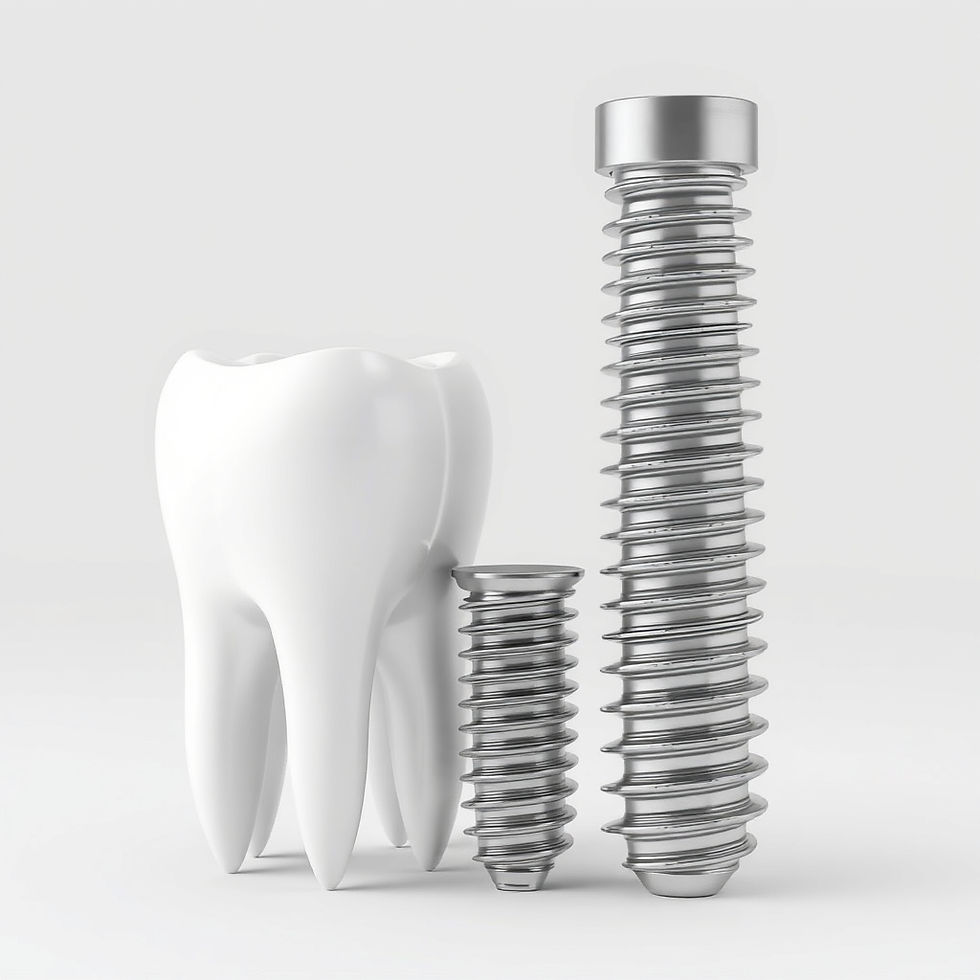
During dental implant surgery, a dental professional drills a hole into the jawbone to insert a metal post, which serves as an artificial tooth root. It's crucial to allow time for osseointegration, where the bone in the patient's jaw grows around the post. Although this process can take several months, it is vital for ensuring a healthy and stable implant. The abutment, which connects to the dental crown, is typically not attached to the post until osseointegration is complete.
Occasionally, the dentist may need to perform a minor surgery to place the abutment. This procedure involves only the gums and may cause some bleeding and swelling. However, the discomfort from placing the abutment is generally less intense than the pain experienced after inserting the metal post.
How Painful is the Implant Surgery?
Dental implant surgery involves trauma to the gums and jaw. There's no pain during the procedure due to numbing, but patients may feel pain afterward. Dentists often prescribe pain medication, though over-the-counter options may suffice for mild pain. Single implants usually cause less discomfort than multiple ones, with pain lasting up to 10 days. Persistent pain beyond this may indicate an infection, requiring immediate dental attention to preserve the implant.
Let's review the surgical phase of a dental implant in Simpsonville, SC:
Step 1: Local anesthesia is administered to numb the area completely.
Step 2: A space is prepared in the gums and jawbone for the titanium post using 3D computerized planning for precise placement.
Step 3: The post is inserted and secured, with a cap placed on top for protection during healing, and stitches may be used to aid gum healing.
Step one involves numbing with local anesthesia to ensure no pain during the dental implant procedure, addressing concerns about discomfort. While you may feel pressure, it shouldn't be uncomfortable. Oral sedation is available for anxious patients.
Am I Suitable for Dental Implants?
If you are missing one or more teeth, you might be a good candidate for dental implants. However, you may need additional steps before the surgery.
When a tooth is lost, the surrounding bone deteriorates. Successful dental implants require enough bone to support the post. If your tooth has been missing for a while, you may lack sufficient bone.
If we extract your tooth, we can restore your bone with a bone graft, using grafting material to build enough structure for an implant.
The best part is that this entire procedure can often be done under one roof. Our dental implant dentists are trained to prep, place, and restore your smile with dental implants.
How Long is the Dental Implants Recovery?
Most patients find dental implant surgery simpler and easier than a tooth extraction. You can typically resume work or daily activities the next day. For soreness, take over-the-counter pain relievers like Advil, avoid hard foods, and use an ice pack for swelling.
Healing for the implant to fuse with the bone can take four or more months. Once healed, you will be ready for the next step: your crown restoration, which will look like a natural tooth and can be made in our office.
Does the Number of Implants Affect Discomfort?
Yes. A single implant often causes very little post-procedure soreness. Multiple implants may require a slightly longer recovery. Even so, the discomfort is typically manageable.
People often find that the anticipation is worse than the experience itself.
Factors That Affect How Much Implants Hurt
1. Individual Pain Tolerance
Some people are naturally more sensitive than others.
2. Location of the Implant
Upper jaw implants may feel different than lower jaw implants, and molar areas can be slightly more tender due to jawbone thickness.
3. Bone and Gum Condition
If bone grafting or sinus lifting is required, recovery may involve additional mild soreness.
4. Skill and Technique of the Provider
Well-planned, precise placement significantly reduces post-operative discomfort.
5. Following Aftercare Instructions
Proper care greatly influences healing speed and comfort.
Do Bone Grafts Hurt More Than Regular Implant Placement?
If a bone graft is needed, the discomfort is usually similar to implant placement. Minor pressure or soreness is expected. Most patients describe it as a “dull ache” rather than sharp pain. Healing takes longer, but the discomfort level typically does not increase dramatically.
How Dentists Keep the Procedure Comfortable
Several tools and techniques help minimize discomfort:
Local anesthesia to fully numb the area
Sedation for anxious patients
Digital scans to avoid unnecessary cutting or drilling
Gentle surgical techniques
Step-by-step guidance so patients know what to expect
This combination allows for a controlled, predictable experience.
Tips for a Comfortable Recovery
You can reduce discomfort and support healing by following these steps:
Use ice packs during the first day
Take recommended pain relievers on schedule
Avoid hot foods for the first 24 hours
Choose soft foods such as yogurt, mashed potatoes, soup, and smoothies
Keep your head elevated during sleep
Avoid smoking, as it slows healing
Rinse gently with warm salt water after the first day
Most patients return to work or regular activities within one to two days.
Conclusion
Dental implants may cause mild, temporary discomfort, but the procedure itself is not painful due to effective anesthesia. Most people are surprised by how manageable the entire process feels. Recovery is typically smooth, and long-term comfort is one of the major reasons implants are considered the gold standard for tooth replacement.
For individuals with healthy gums, good bone support, and clear post-operative instructions, the experience is far less intimidating than many expect.
Medical Disclaimer
This article is for informational purposes only and does not provide medical or dental advice. Dental implant procedures, pain levels, and recovery vary by individual. Always consult a licensed dentist or healthcare professional for diagnosis, treatment recommendations, or personalized care.
Reference List
1. American Dental Association (ADA). (2024). Dental implants. ADA MouthHealthy.https://www.mouthhealthy.org/all-topics-a-z/dental-implants
2. American Academy of Implant Dentistry (AAID). (2024). Dental implant facts.https://www.aaid-implant.org/dental-implants/
3. Mayo Clinic Staff. (2023). Dental implant surgery. Mayo Clinic.https://www.mayoclinic.org/tests-procedures/dental-implant-surgery/about/pac-20384622
4. Cleveland Clinic. (2023). Dental implant surgery: Procedure, risks, and recovery.https://my.clevelandclinic.org/health/treatments/10959-dental-implant-surgery
5. Colgate Oral Care Center. (2023). What to expect during dental implant surgery.https://www.colgate.com/en-us/oral-health/implants/what-to-expect-during-dental-implant-surgery
6. American Association of Oral and Maxillofacial Surgeons (AAOMS). (2023). Osseointegration and implant success.https://www.aaoms.org/
7. Esposito, M., Grusovin, M. G., & Coulthard, P. (2007). The efficacy of various bone grafts in implant dentistry. Cochrane Database of Systematic Reviews.https://doi.org/10.1002/14651858.CD003815.pub3
8. Pjetursson, B. E., et al. (2012). Implant placement and complications. Clinical Oral Implants Research, 23(S6), 22–38.
9. Jung, R. E., et al. (2012). Systematic review of dental implant outcomes. Clinical Oral Implants Research, 23(S6), 122–135.
10. Centers for Disease Control and Prevention (CDC). (2024). Post-surgical infection prevention guidelines.https://www.cdc.gov/hai/prevent/prevention.html



Comments