
Home Remedies for Skin Allergy : Relief You Can Try at Home
- plurefy com
- Feb 10
- 8 min read


Skin allergies can pop up suddenly, whether from new skincare products, weather changes, or everyday stress. Redness, itching, and irritation can be uncomfortable, and knowing how to calm your skin safely really matters. If you’ve ever dealt with a reaction and wanted quick, gentle relief without harsh products, this guide is for you.
In this article, we’ll cover home remedies for skin allergy relief you can try at home, focusing on simple, soothing options that support sensitive skin. You’ll find practical tips, expert-backed advice, helpful visuals, and quick answers to common questions to help you manage flare-ups with confidence.
What Is a Skin Allergy and Why Does It Happen

A skin allergy occurs when your immune system overreacts to a usually harmless substance (allergen), mistaking it for a threat and triggering inflammation via chemicals like histamine. This leads to red, itchy, swollen, or rashy skin as the body releases antibodies to "fight" the invader.
Common in conditions like contact dermatitis, eczema (atopic dermatitis), and hives (urticaria), it often stems from direct contact, ingestion, or environmental exposure. Genetics, family history of allergies, or a weakened skin barrier increase susceptibility, making skin more reactive in 2026's high-allergen world.
Common Causes of Skin Allergies
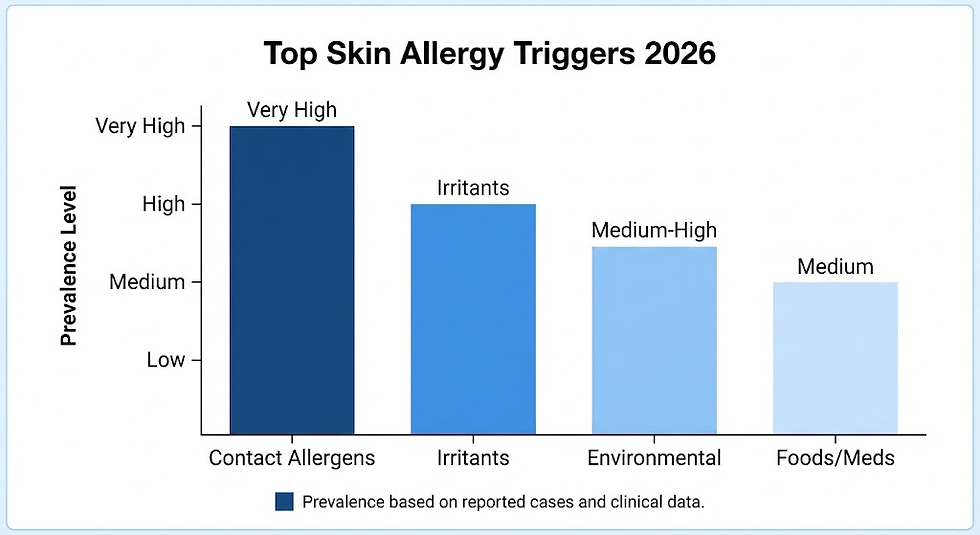
Cause Category | Common Examples | How It Triggers Reaction |
Contact Allergens | Nickel (jewelry), fragrances, preservatives in cosmetics, latex, poison ivy/oak | Direct skin contact causes localized allergic contact dermatitis |
Irritants (Non-Allergic) | Soaps, detergents, harsh chemicals, excessive water exposure | Weakens barrier leading to irritant dermatitis (often confused with allergy) |
Environmental Allergens | Pollen, dust mites, mold, pet dander | Inhaled or contact; worsens eczema or triggers hives/redness |
Foods & Medications | Peanuts, shellfish, eggs, antibiotics, aspirin | Ingestion causes systemic hives, swelling, or eczema flares |
Metals & Fabrics | Nickel/cobalt in jewelry, dyes/resins in clothing | Prolonged contact leads to chronic rashes/itching |
Plants & Other | Rubber, adhesives, certain plants (chrysanthemums, tulips) | Topical exposure results in blisters/redness |
Typical Symptoms of a Skin Allergy

Itching — Often intense and persistent, the most common early sign across all types.
Redness & Inflammation — Skin appears red (or darker on deeper tones), swollen, and warm/hot to touch.
Rash or Bumps — Raised welts (hives), red patches, small fluid-filled blisters, or dry/scaly areas.
Swelling — Localized puffiness (e.g., angioedema) or hives that blanch (turn white when pressed).
Dryness/Cracking — Common in eczema; skin may flake, crack, ooze, or crust if scratched/infected.
Burning/Stinging — Especially in contact dermatitis; can precede visible rash.
These symptoms vary by type (e.g., hives appear suddenly, eczema is chronic)—seek a dermatologist if persistent for proper diagnosis and management.
Home Remedies for Skin Allergy Relief

Home remedies offer gentle, natural ways to ease skin allergy symptoms like itching, redness, and inflammation while supporting recovery—often complementing medical advice for conditions like contact dermatitis, hives, or eczema. Popular options include aloe vera for cooling soothing, cold compresses for quick de-swelling, coconut oil for barrier repair, oatmeal baths for widespread calm, baking soda pastes for mild rashes, and honey for its healing/antibacterial effects. Always patch-test first, as some may irritate sensitive skin further, and consult a dermatologist if symptoms persist, worsen, or show infection signs. These evidence-based approaches focus on anti-inflammatory, moisturizing, and protective benefits for temporary relief.
Aloe Vera for Instant Soothing

Pure aloe vera gel (from the plant or 99-100% pure) provides immediate cooling relief by reducing inflammation and histamine effects.
Its compounds fight bacteria/fungi, soothe irritation, and hydrate without greasiness—ideal for redness, itching, or mild allergic reactions.
Apply fresh gel directly to affected areas 2-3 times daily; patch-test to avoid rare contact dermatitis.
Supports healing for minor rashes/sunburn-related allergies; evidence shows it eases atopic dermatitis-like symptoms.
Benefit | How It Works | Relief Level (Quick/Effective) |
Cooling & Anti-Inflammatory | Reduces swelling & histamine release | Instant (High) |
Hydration & Soothing | Moisturizes dry/irritated skin | Fast (High) |
Healing Support | Antimicrobial, promotes recovery | Moderate (Medium-High) |
Barrier Protection | Calms without clogging pores | Supportive (High) |
Cold Compress to Reduce Itching and Swelling

Wrap ice/cold pack in cloth; apply 10-15 mins to shrink blood vessels, numb itch, and curb histamine release.
Repeat every few hours for hives, rashes, or swelling—avoids direct ice burn on skin.
Offers immediate vasoconstriction to reduce redness/puffiness; safe for most allergic reactions.
Combine with elevation for facial/eye swelling; no cost, widely recommended by derms.
Coconut Oil to Repair the Skin Barrier

Benefit | How Coconut Oil Works (Virgin/Organic Preferred) | Impact for Allergic Skin |
Barrier Repair & Hydration | Fatty acids (lauric) penetrate & lock moisture | Restores compromised barrier in eczema-like allergies |
Anti-Inflammatory | Reduces cytokines & redness | Soothes irritation & prevents flares |
Antimicrobial Protection | Fights bacteria/fungi on damaged skin | Lowers infection risk from scratching |
Moisturizing Without Irritation | Emollient; improves elasticity | Ideal for dry, reactive types (patch-test first) |
Oatmeal Baths for Sensitive and Inflamed Skin

Add 1 cup colloidal/finely ground oatmeal to lukewarm bath; soak 15-20 mins for anti-inflammatory avenanthramides to calm itch/inflammation.
Forms protective barrier, locks moisture, reduces histamine—FDA-approved for eczema/dermatitis relief.
Effective for hives, rashes, or body-wide allergies; pat dry gently after.
Use 2-3x/week; safe for sensitive skin, including children.
Baking Soda Paste for Mild Rashes

Mix 3 parts baking soda + 1 part water into paste; apply 10-15 mins to rash, then rinse—neutralizes acids, reduces itch/inflammation.
Works as mild anti-inflammatory for poison ivy, bug bites, or mild contact allergies.
Soak in ¼-1 cup baking soda bath for broader relief (15-40 mins lukewarm water).
Avoid open wounds; gentle for most, but rinse well to prevent dryness.
Aspect | Effect | Suitability for Mild Rashes |
Itch Neutralization | Balances pH, calms irritation | High |
Anti-Inflammatory | Reduces swelling/redness | Medium-High |
Ease of Use | Cheap, household item | Very High |
Honey for Its Natural Healing Properties

Apply raw/Manuka honey thinly to affected area; its antibacterial/enzymes promote healing & reduce infection risk from scratching.
Anti-inflammatory & humectant—draws moisture, soothes mild rashes/hives while calming redness.
Use medical-grade for wounds; cover lightly 20-30 mins or overnight (if not sticky-sensitive).
Evidence supports faster recovery in irritated skin; avoid in infants under 1 year.
Tips to Prevent Skin Allergies Naturally

Preventing skin allergies naturally focuses on strengthening your skin barrier, minimizing exposure to triggers, and adopting gentle habits that reduce inflammation and irritation. Simple daily changes—like choosing hypoallergenic products, staying hydrated, and avoiding known irritants—can significantly lower the risk of flare-ups in conditions like contact dermatitis, eczema, or hives. These evidence-based approaches emphasize barrier support, anti-inflammatory foods, and environmental control for long-term resilience without relying on medications. Consistency is key: patch-test new items, maintain a clean routine, and consult a dermatologist for personalized advice if reactions persist.
Simple Lifestyle Changes for Sensitive Skin

Stay well-hydrated by drinking plenty of water daily to support skin moisture and barrier function from within.
Use fragrance-free, hypoallergenic moisturizers (with ceramides, hyaluronic acid, or colloidal oatmeal) twice daily to strengthen the lipid barrier and prevent dryness-triggered reactions.
Opt for gentle, lukewarm showers (not hot) and pat skin dry instead of rubbing to avoid stripping natural oils.
Wear breathable, natural fabrics like cotton or linen; wash new clothes before wearing to remove chemical residues.
Incorporate anti-inflammatory foods (e.g., turmeric, ginger, fatty fish, berries) and consider probiotics for gut-skin health support.
Get adequate sleep and manage stress through exercise or relaxation, as poor sleep/stress can worsen sensitivity and inflammation.
How to Avoid Common Allergy Triggers

Fragrances & Preservatives — Choose fragrance-free, dye-free, and paraben-free skincare, soaps, detergents, and cosmetics; read labels carefully.
Metals (e.g., Nickel) — Avoid nickel-containing jewelry, watches, or clothing fasteners; opt for stainless steel, titanium, or plastic alternatives.
Plants & Outdoor Irritants — Wear protective clothing (long sleeves/pants) in gardens or wooded areas; shower and change clothes after outdoor exposure to remove pollen/dust.
Household Chemicals — Use natural, hypoallergenic cleaners (e.g., vinegar-based); wear gloves during chores and ventilate spaces.
Fabrics & Laundry — Switch to fragrance-free, hypoallergenic detergents; rinse clothes twice and air-dry when possible to minimize residues.
Environmental Allergens (Pollen, Dust, Pet Dander) — Keep windows closed on high-pollen days, use HEPA air purifiers, wash bedding weekly in hot water, and bathe pets regularly.
Are Home Remedies for Skin Allergy Safe for Everyone

Home remedies for skin allergies (like aloe vera, oatmeal, or cold compresses) are generally safe and gentle for most people when used correctly, offering natural relief from itching, redness, and inflammation without harsh chemicals. However, they are not universally safe—individual reactions vary based on allergies, skin type, severity of the condition, or broken skin, and some remedies can cause irritation, worsen symptoms, or trigger new allergies (e.g., rare aloe vera sensitivity or baking soda on open wounds). Always patch-test first, avoid on severe/infected cases, and consult a dermatologist for persistent issues, especially in children, pregnant individuals, or those with compromised immunity. These approaches provide supportive relief but aren't substitutes for medical treatment.
Patch Testing Before Trying Any Remedy

Patch testing identifies potential irritation or allergy before full application—essential for natural remedies like aloe, honey, or oils.
Apply a small amount to a discreet area (inner forearm, elbow bend, or behind ear); cover loosely if needed and leave for 24-48 hours.
Monitor for redness, itching, swelling, or rash—if any reaction occurs, rinse immediately and avoid use; no reaction means it's likely safe.
Wait 48-72 hours for delayed reactions (common with contact allergens); repeat on a different spot if unsure.
Safe for most remedies (e.g., aloe vera, coconut oil, chamomile); skip if skin is already broken or severely inflamed.
Home Remedies to Avoid on Broken Skin

Baking Soda Paste — Can sting, dry out further, or cause chemical irritation/burn on open wounds; increases infection risk.
Undiluted Essential Oils (e.g., tea tree, peppermint) — Highly irritating and can cause burning, allergic contact dermatitis, or delay healing on broken areas.
Honey (if not medical-grade) — While antibacterial, raw honey risks botulism spores or contamination on open skin; avoid unless sterile.
Vinegar/Apple Cider Vinegar — Acidic pH stings intensely and disrupts healing on cuts/cracks; may worsen inflammation.
Salt Scrubs or Harsh Pastes — Abrasive and drying; can embed particles in wounds and promote infection.
Any Unpasteurized/Natural Item Without Patch Test — Risk of introducing bacteria/fungi to compromised barrier—stick to gentle options like plain cold compresses or prescribed ointments.
Note: Broken or oozing skin needs medical attention—home remedies are for intact skin only. If infection signs (pus, fever, swelling) appear, see a doctor promptly.
Home Remedies for Skin Allergy: Relief You Can Try at Home – Final Thoughts

Home remedies like aloe vera, cold compresses, colloidal oatmeal, coconut oil, chamomile, and honey offer gentle, natural relief for mild skin allergies—easing itch, redness, and swelling quickly and affordably. Patch-test everything first, avoid using on broken or infected skin, and skip potential irritants (e.g., undiluted oils, baking soda on wounds). These support barrier repair and calm inflammation but are for temporary symptom management only. Prevention is key: use fragrance-free products, stay hydrated, wear breathable fabrics, and avoid known triggers. If symptoms worsen, spread, persist, or show infection signs (pus, fever, severe swelling), stop and see a dermatologist immediately. Used mindfully, these simple at-home options provide safe, effective comfort for most people.
Frequently Asked Questions About Home Remedies for Skin Allergy
How Long Does a Skin Allergy Take to Heal?
Mild cases (hives, contact rash) heal in a few hours to 3–7 days with trigger avoidance. Moderate ones take 1–3 weeks; severe or chronic can last months—see a doctor if no improvement in 7–10 days.
Can Home Remedies Cure Skin Allergy Permanently?
No, home remedies only relieve symptoms temporarily and support healing—they do not cure allergies permanently. Permanent resolution needs allergen avoidance or medical treatment (e.g., allergy testing, prescriptions).
Are Home Remedies Safe for Children and Babies?
Gentle ones (aloe vera, oatmeal baths, cold compresses) are usually safe if patch-tested first. Avoid honey (under 1 year), essential oils, baking soda, and anything irritating—always check with a pediatrician before use.


Comments