
Are Dental Implants Safe?
- Twishi Jain
- Dec 8, 2025
- 6 min read

Updated: Jan 9
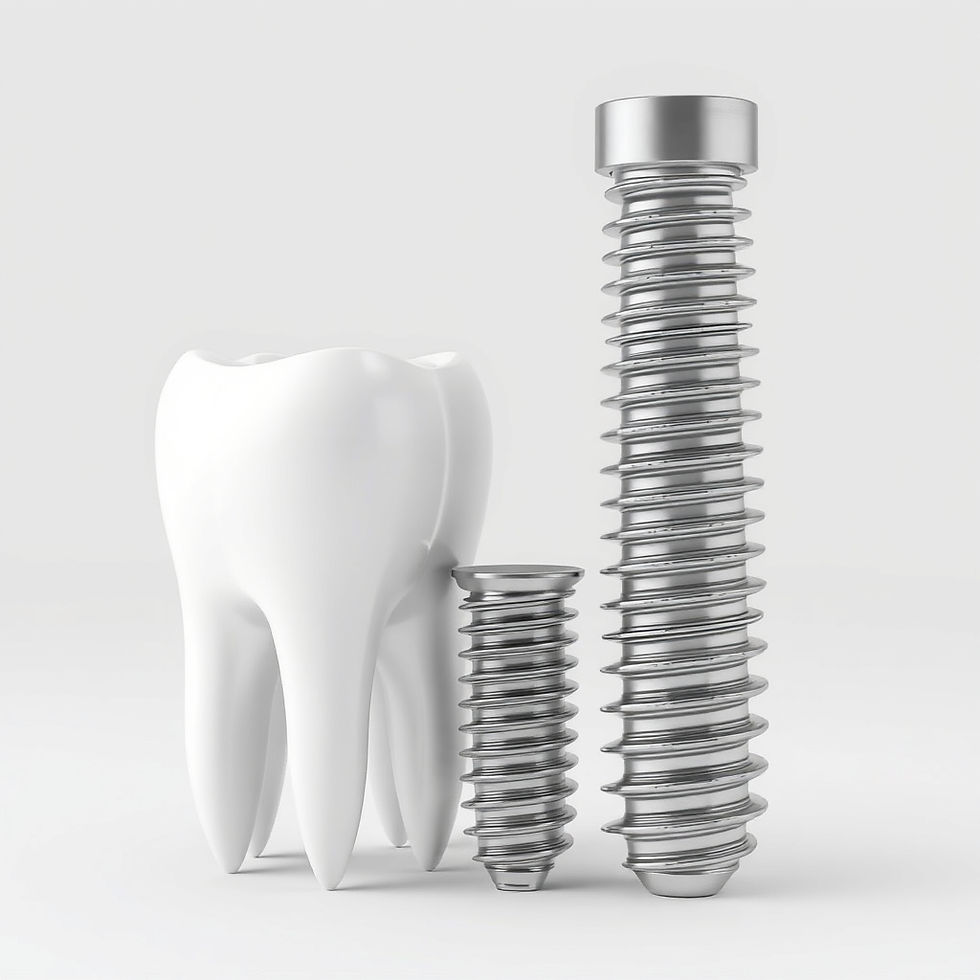
Dental implants serve as permanent artificial teeth and are suggested if you have missing teeth or require replacements. The short answer is yes. When placed by a qualified professional using proper techniques, dental implants are considered a highly safe and predictable treatment with long-term success rates typically above 95 percent. Like any medical procedure, they carry risks, but the vast majority of complications are rare, preventable, or treatable.
Are Dental Implants Safe or are There Risks?
Dental implants are generally safe for many individuals in good health, as recommended by dentists. In the United States, the FDA must approve dental implant systems, ensuring they meet international safety standards. Obtaining dental implants is a multi-month process that can be invasive, involving anesthesia, surgery, and recovery. It can also be costly, and factors like health and age may affect the success rate.
Complications from dental implants include:
Surgical issues, such as damage to teeth, tissues, bone, sinus cavity, or nerves
Improper setting, leading to a loose, non-functional implant
Infections
Extended healing time
Tooth sensitivity
Difficulty cleaning the implant and surrounding teeth
You may not be an ideal candidate for a dental implant if you:
smoke
have gum disease
have an autoimmune disease or diabetes
have certain allergies
have a compromised immune system
take medications affecting calcium
have osteoporosis
are receiving chemotherapy or radiation
What Makes Dental Implants Safe?
Several factors contribute to the strong safety profile of dental implants:
1. Biocompatible Materials
Most implants are made from titanium or titanium alloys. Titanium integrates naturally with bone in a process called osseointegration, meaning the body usually accepts the implant without reaction.
Zirconia implants provide a metal-free option and are also considered biocompatible.
2. Predictable Surgical Procedure
Implant placement is a well-studied procedure supported by decades of clinical data. Dentists and oral surgeons follow precise protocols based on imaging, bone quality, and individual anatomy.
3. High Long-Term Success Rates
Research shows dental implants have one of the highest success rates in modern dentistry. When properly maintained, many last decades without replacement.
4. Protection for Adjacent Teeth and Bone
Unlike dental bridges, implants do not require altering neighboring teeth. They also stimulate the jawbone, helping prevent bone loss. This stability contributes to long-term oral health.
Is it Safe for Older Individuals to Get Dental Implants?
If you are over 60, consider the risks of dental implants. A 2020 study highlights:
longer healing periods
existing health conditions
potential bone health issues
Discuss concerns with your doctor before proceeding.
How Often do Complications Arise with Dental Implants?
If you are in good overall health, your procedure is likely to be successful. A 2022 study Trusted Source found that 93% of implants remained functional 20 years after receiving tissue-level implants. However, individuals with gum disease who did not maintain gum care faced higher risks of complications and implant failure.
Your chances of implant failure may increase if you smoke. A 2020 study Trusted Source showed that smokers had an 11% failure rate, compared to 5% for non-smokers. Another 2022 study Trusted Source found smokers have a 140% higher risk of failure than non-smokers.
Do Dental Implants Cause Pain?

You might feel some pain and discomfort during and following the procedure, but it shouldn't be prolonged. The operation will include general or local anesthesia. You can take pain relief medication to ease discomfort in the days after the surgery.
What is Involved in the Dental Implant Procedure?
Dental implant procedures take several months and vary based on individual needs.
You may need teeth pulled or a dental bone graft, depending on the reason for the implant.
Your oral surgeon will insert posts into your jawbone, which require several months to heal.
After healing, the surgeon attaches the false tooth or crown to the posts.
Who is Eligible for Dental Implants?
You might be an ideal candidate for dental implants if:
you have good overall health
you maintain your oral health and are free from gum disease
your jawbone can support the implants
Alternatives to Dental Implants
If dental implants are not suitable for you or you prefer not to have the procedure, consider these other options:
Bridges
Full or partial Dentures
A Root Canal if the existing tooth or teeth can be preserved
You might also choose not to replace missing teeth, leaving gaps in your mouth. Be aware that this can impact eating and speaking, and the gap may eventually affect other teeth.
How Dentists Maximize Safety
Several steps ensure implants are placed safely and predictably:
1. Comprehensive Examination
This includes dental X-rays, 3D scans, photographs, and a detailed health history review.
2. Digital Treatment Planning
Modern implant placement often uses guided surgery. Digital scans map bone levels, nerve pathways, and spacing so the implant is positioned precisely.
3. Sterile, Controlled Surgical Environment
Strict infection-control procedures reduce complications.
4. Proper Healing Time
Allowing bone to integrate with the implant is critical. Rushing the process increases the risk of movement and failure.
5. Follow-Up Care
Post-operative appointments ensure healing is on track and identify early signs of inflammation.
FAQs
1. How long does a dental implant last?
Most dental implants can last a lifetime if you take good care of your teeth and gums. The crown on top may need replacement after 10–15 years due to normal wear.
2. How long does recovery take after getting an implant?
Recovery varies, but most people start feeling better within a few days. Full healing of the bone around the implant can take three to six months.
3. Can dental implants look like natural teeth?
Yes. Implants are designed to match the shape, size, and color of your natural teeth, so they blend in and look very realistic.
4. Do dental implants require special cleaning?
No special tools are required. You clean implants the same way as natural teeth: brushing twice a day, flossing daily, and seeing your dentist regularly.
5. Can you get a dental implant if you have already lost bone?
Possibly. If you don’t have enough bone, a bone graft may be recommended before placing the implant to strengthen the area.
6. Are dental implants covered by insurance?
Coverage varies. Some insurance plans pay for part of the implant or crown, while others do not cover implants at all. It depends on your policy.
7. Can dental implants replace multiple missing teeth?
Yes. Implants can support single teeth, bridges, or even full dentures, depending on how many teeth are missing.
8. Is there an age limit for dental implants?
There is no set age limit. Adults of any age can get implants if they are healthy enough for the procedure and have enough bone support.
9. What happens if I don’t replace a missing tooth?
The space may cause nearby teeth to shift, affect your bite, make chewing harder, and lead to jawbone loss over time.
10. How do I prepare for a dental implant appointment?
Your dentist may ask for X-rays, a medical history review, and a treatment plan. You might also need to stop certain medications temporarily or arrange transportation for the day of surgery.
Conclusion
Dental implants are generally regarded as safe in numerous situations. The success of your dental implants can be influenced by factors such as your general health, oral health, age, and lifestyle habits. It's also important to consider the requirements and expenses of the procedure before proceeding. Some dental insurance plans may cover part of the costs, while others might not. If you're considering alternatives to dental implants, there are several options available. Make sure to consult your dentist for details specific to your situation.
Medical Disclaimer
This content is for informational purposes only and does not replace professional dental or medical advice. Dental implant suitability, risks, and outcomes vary by individual. Always consult a qualified dentist or healthcare provider before starting or changing any treatment.
References
American Dental Association (ADA). Guidelines on dental implant safety, candidacy, and treatment standards.
U.S. Food and Drug Administration (FDA). Dental Implant Systems: Regulatory approval and safety requirements.
Misch, C. E. (2019). Contemporary Implant Dentistry. Mosby Elsevier.
Esposito, M., Grusovin, M., & Worthington, H. (2020). Long-term outcomes of dental implants in adults over 60.
Javed, F., & Romanos, G. (2020). Smoking-related risks in dental implant failure.
Buser, D., et al. (2022). Twenty-year clinical study on tissue-level dental implants and survival rates.
American Academy of Periodontology (AAP). Impact of gum disease on implant success and oral health.
National Institute of Dental and Craniofacial Research (NIDCR). Bone health, osteoporosis, and dental implant considerations.
Cochrane Oral Health Group. Reviews on dental implant complications, infection risk, and postoperative outcomes.
Mayo Clinic. Dental implant procedure overview, healing timelines, and candidacy


Comments