
Original Fermented Sarsaparilla Root Beer Recipe: Authentic Taste & Traditional Brewing Guide
- Vaibhav Sharma

- Apr 10
- 3 min read
Walk into any old-world herbal tradition, and you’ll find a drink that sits somewhere between medicine and refreshment that’s exactly where original recipe fermented root beer sarsaparilla root beer comes from.

Before modern sodas took over, this beverage was a naturally brewed, mildly fermented herbal tonic, made from roots, bark, spices, and yeast. Today, recreating it means going back to its authentic roots literally.
What Is Traditional Sarsaparilla Root Beer?
Traditional root beer was not a factory-made soda. It was a homemade fermented drink derived from medicinal root teas used by Indigenous communities and early settlers in North America.
Key characteristics:
Made from roots, herbs, and bark
Naturally fermented with yeast
Lightly carbonated from fermentation
Often contained trace alcohol (low %)
Served as both a refreshment and herbal tonic
Sarsaparilla, derived from Smilax species, gave the drink its distinct earthy, slightly bitter flavor.
Historical Origins of Fermented Root Beer
The original recipe evolved over centuries:
Indigenous communities brewed root-based medicinal teas
Colonists adapted recipes using local herbs and fermentation
By the 1800s, root beer became a commercial herbal drink
Early versions were naturally fermented, not artificially carbonated
Unlike modern soda, this drink was closer to a functional beverage with botanical complexity.
Core Ingredients in Original Sarsaparilla Root Beer

Authentic recipes vary, but historically consistent ingredients include:
Primary Roots
Sarsaparilla root (main flavor base)
Sassafras root bark (traditional but now restricted in some regions)
Dandelion root
Burdock root
Supporting Herbs & Spices
Licorice root (adds sweetness)
Ginger root (spice and digestion support)
Birch bark
Wintergreen
Star anise or vanilla
Sweeteners & Fermentation Agents
Molasses or cane sugar
Natural yeast or “ginger bug”
These ingredients created a layered flavor profile earthy, sweet, spicy, and slightly bitter.
Original Recipe (Fermented Sarsaparilla Root Beer)
Ingredients
10 cups water
3 tbsp sarsaparilla root
1 tbsp ginger root
1 tbsp licorice root
2 tsp dandelion root
2 tsp birch bark
¼ cup sassafras root bark (optional depending on safety regulations)
¾ cup unrefined sugar
½ cup active fermentation starter (like ginger bug)
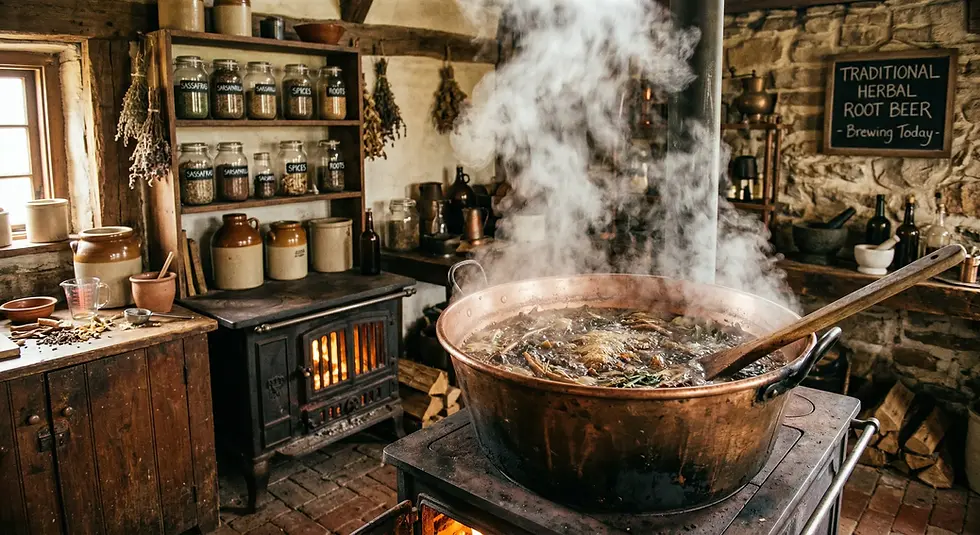
Instructions
Prepare the root decoction
Boil water and add all roots and herbs
Simmer for 30–45 minutes
Add sweetness
Stir in sugar while hot until dissolved
Cool completely
Let mixture reach room temperature
Strain
Remove all plant material
Fermentation
Add fermentation starter
Bottle in airtight containers
Ferment
Leave at room temperature for 1–3 days
Refrigerate
Chill to slow fermentation and build carbonation
This method produces a naturally fizzy, probiotic-rich beverage
How Fermentation Works in Root Beer
Fermentation is what makes this drink unique.
Yeast consumes sugar → produces CO₂ (fizz) + trace alcohol
Creates natural carbonation (no artificial gas needed)
Enhances flavor complexity
May introduce beneficial microbes
Historically, this process was the only way to carbonate root beer before industrial methods
Flavor Profile: What Makes It Unique?
Original fermented root beer tastes nothing like modern soda.
Expect:
Earthy base from roots
Mild bitterness from sarsaparilla
Sweetness from molasses or sugar
Spicy notes from ginger and herbs
Creamy aroma from vanilla/licorice
This complexity is why every family historically had its own unique recipe.
Safety Note on Sassafras
Traditional recipes used sassafras root
It contains safrole, which has been restricted in some countries
Modern recipes often use safrole-free extracts or omit it entirely
Always ensure ingredients comply with local food safety regulations.
Feature | Traditional Fermented | Modern Commercial |
Carbonation | Natural fermentation | Artificial CO₂ |
Ingredients | Real roots & herbs | Flavor extracts |
Alcohol | Trace amounts | Usually none |
Health angle | Herbal tonic | Soft drink |
Flavor | Complex & earthy | Sweet & uniform |
Why This Recipe Still Matters Today

The revival of fermented drinks has brought back interest because it offers:
A return to natural, traditional beverages
Unique craft flavor profiles
A connection to historical brewing practices
A potential alternative to ultra-processed sodas
Medical Disclaimer
This article is for informational purposes only. Fermented beverages may contain trace alcohol and herbal compounds that may not be suitable for everyone. Consult a qualified healthcare professional before consuming herbal or fermented drinks, especially if you are pregnant, nursing, or have underlying health conditions.
References & Citations
1. Root Beer History & Traditional Fermentation
2. Sarsaparilla & Root Beer Composition
3. Traditional Herbal Brewing Origins
4. Early American Root Beer Development


Comments