
How Long Does Lip Filler Last?
- Twishi Jain
- Jan 20
- 4 min read


Lip fillers have become one of the most popular ways to get a fuller, more defined smile. But before you book your appointment, the biggest question is always: "How long will my results last?" In this blog, we will break down the timelines, the science, and the simple habits that can help you keep your glow for as long as possible.
What are Lip Fillers?

Most modern lip fillers are made of Hyaluronic Acid (HA). This is a sugar molecule that your body produces naturally in your skin and joints. It loves water—in fact, it can hold up to 1,000 times its weight in water!
When a doctor injects HA into your lips, it adds volume and shape. Because it is a natural substance, your body eventually breaks it down and absorbs it. This is why fillers are temporary.
Standard Duration: How Long Should You Expect?

On average, most lip fillers last between 6 and 12 months. However, the exact time depends on which "brand" or "formula" your doctor uses.
Filler Brand | Typical Duration | Best For... |
Juvederm Ultra | 6–9 Months | Dramatic volume and "plump." |
Juvederm Volbella | 12 Months | Subtle shine and smoothing lines. |
Restylane Kysse | 9–12 Months | Soft, natural movement. |
Restylane Silk | 6 Months | Very fine detail work. |
Why Do Fillers Last Longer for Some People?

Have you ever wondered why your friend’s filler lasted a year while yours faded in six months? It usually comes down to these factors:
Metabolism: If you have a high metabolism (you burn calories quickly), your body will likely "eat" the filler faster too.
Movement: We use our lips constantly—talking, eating, and smiling. The more your lips move, the faster the filler breaks down.
Age: Younger skin tends to have a faster cell turnover, while older skin may hold onto filler slightly longer but may need more product for the same look.
Hydration: Since HA fillers love water, staying hydrated helps the filler stay "plump" and visible.
The Lip Filler Timeline: What to Expect
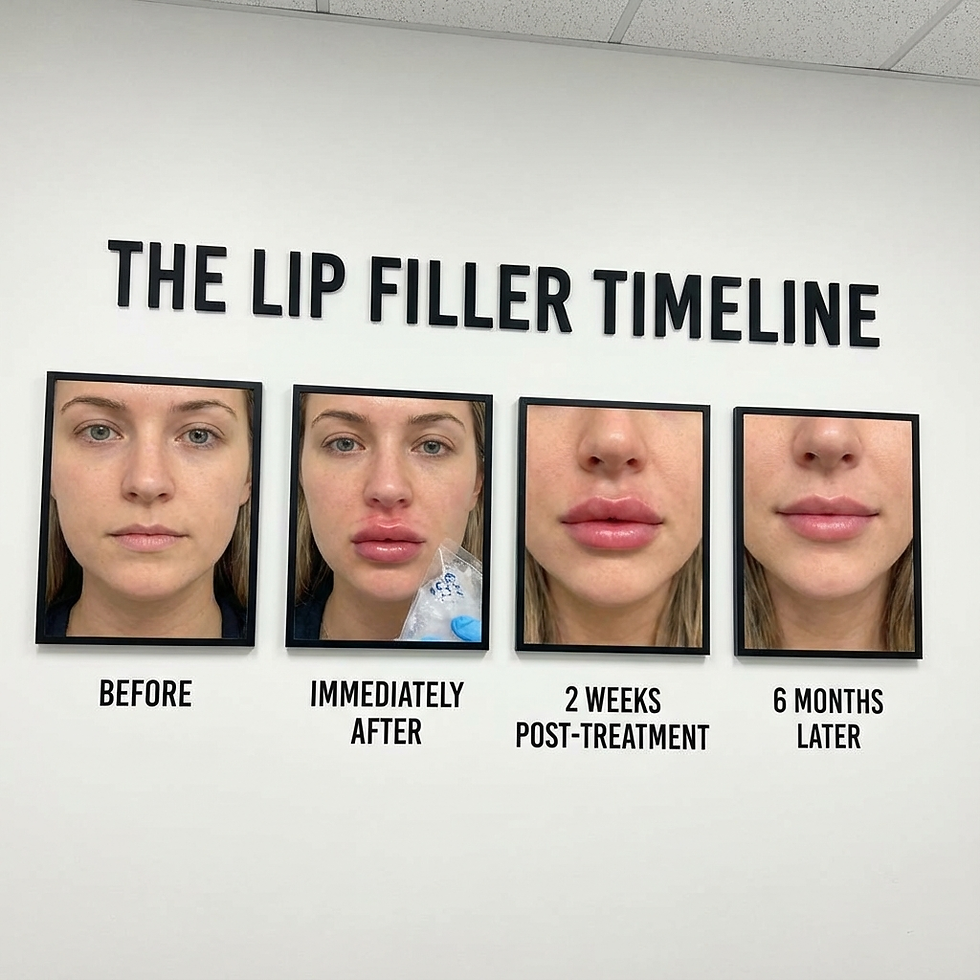
Day 0: Injection Day
Your lips will look very full immediately. You might see tiny needle marks or redness.
Days 1–3: The "Swelling Stage"
Don't panic! Your lips will look much larger than you expected due to swelling. This is normal. You may have some bruising.
Week 2: The Final Look
The swelling is gone, and the filler has "settled" into the tissue. This is your true result.
Months 2–6: The Sweet Spot
Your lips look their best. The volume is stable, and the texture is soft.
Months 9–12: Gradual Fading
You will notice your lips slowly returning to their original size. This is the time most people book a "top-off" or "touch-up."
How to Make Your Lip Filler Last Longer

While you can't stop your metabolism, you can follow these "Golden Rules" to protect your investment:
Drink Tons of Water: HA fillers need water to stay plump. If you are dehydrated, your lips will look smaller.
Protect from the Sun: UV rays break down both your natural collagen and your filler. Wear an SPF lip balm every day.
Eat Healthy: High inflammation in the body (from sugar or processed foods) can cause filler to break down faster.
Don't Massage: Unless your doctor tells you to, leave your lips alone for the first 48 hours. Moving the filler around can cause it to dissolve unevenly.
Signs Your Filler is Wearing Off

How do you know it's time for more?
Loss of "The Pout": Your lips don't project as much when you look at your side profile.
Lip Lines Return: Those tiny "smoker's lines" or vertical lines become visible again.
Softer Feel: The lips feel less "firm" and more like your natural lip tissue.
Frequently Asked Questions (FAQ)
Does metabolism affect lip filler?
Yes. High-performance athletes or people with very active metabolisms often find their filler dissolves 20–30% faster than average.
Can lip fillers be permanent?
No. Most reputable doctors avoid permanent fillers because they can cause lumps and cannot be easily fixed if you don't like the look.
Is lip filler reversible?
Yes! If you don't like your results, a doctor can inject an enzyme called Hyaluronidase that dissolves the filler in minutes.
Do different brands last differently?
Yes. Some formulas are "thicker" (like Juvederm Ultra) and provide more lift, while others are "thinner" and more flexible.
Does it hurt more the second time?
Usually, no. Many patients feel more relaxed during the second session because they know what to expect.
Side Effects & Safety
While safe, you should be aware of:
Bruising/Swelling: Very common for 3–7 days.
Lumps: Small lumps can happen but usually go away with a light massage from your doctor.
Asymmetry: One side might swell more than the other. Wait 14 days before asking for a fix.
Conclusion: Patience is Key
Lip filler is a journey, not a one-time event. On average, you should plan for a maintenance visit every 9 months. Remember, "less is more"—it is better to add a little bit of filler consistently than to overfill your lips all at once.
Always choose a board-certified injector who understands lip anatomy to ensure your results are safe and long-lasting.
Medical Disclaimer - This information is for educational purposes only and does not constitute medical advice. Results from lip fillers vary significantly based on individual biology, lifestyle, and the specific products used. Always consult with a board-certified dermatologist or plastic surgeon before undergoing any cosmetic procedure. If you experience severe pain, skin discoloration, or vision changes after an injection, seek emergency medical attention immediately as these can be signs of a rare but serious complication called vascular occlusion.
📚 Sources & Medical References
American Society of Plastic Surgeons: Dermal Fillers Overview & Hyaluronic Acid Guide
American Board of Cosmetic Surgery: Injectable Fillers Guide: Everything You Need to Know
National Institutes of Health (NIH): Hyaluronic acid: A key molecule in skin aging
Juvéderm® Official Clinical Data: Juvéderm Product Longevity and Results
Restylane® Official Patient Information: Restylane Kysse Clinical Study and Duration
The Journal of Clinical and Aesthetic Dermatology: Fillers in Medicine: Factors Affecting Longevity
Cleveland Clinic: Dermal Fillers: Types, Benefits & Side Effects


Comments